Back to Rome
Continue to Villa Borghese Gardens
The
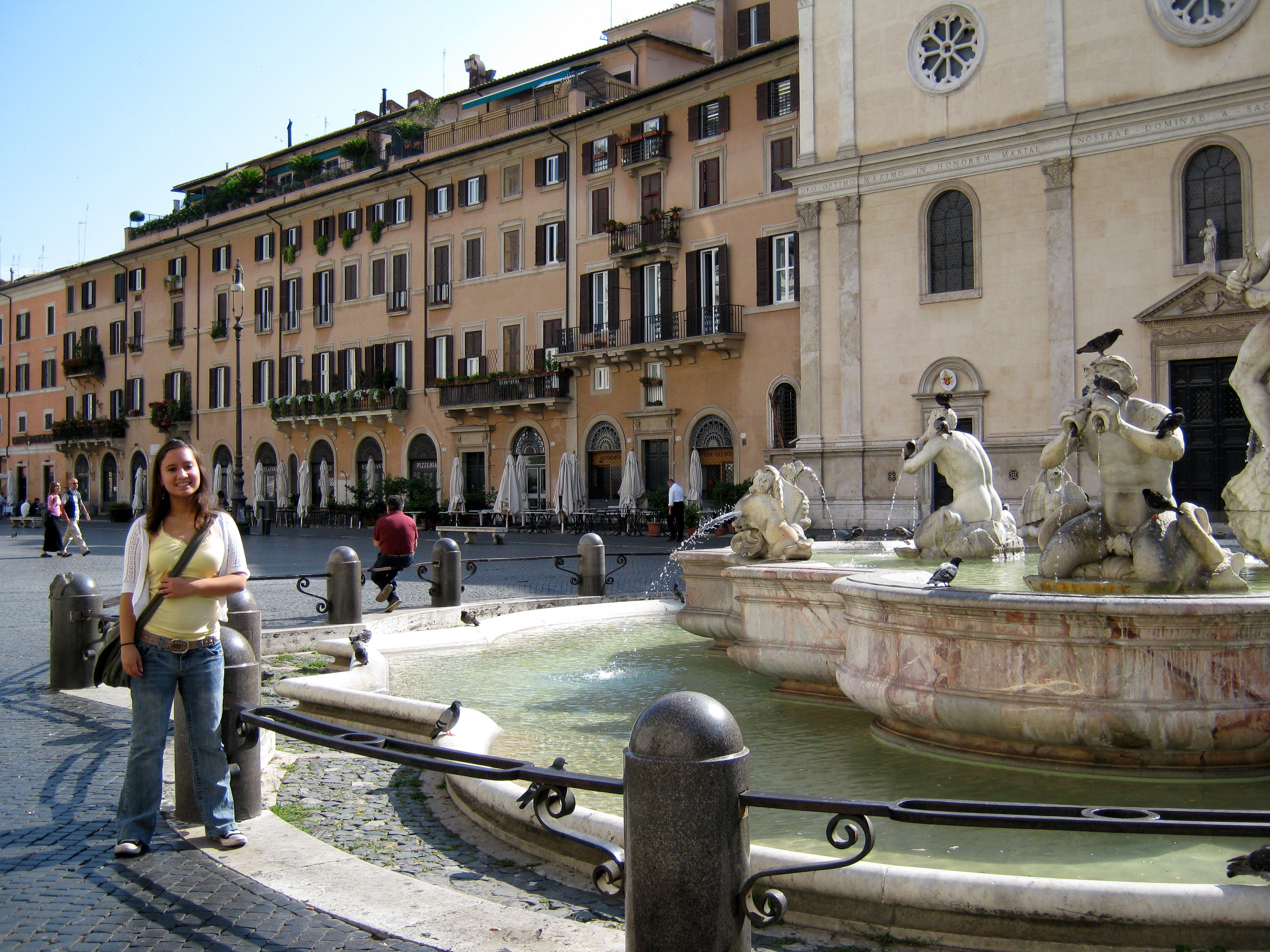
Piazza Navona is a long, narrow square which is popular with tourists, despite
(or maybe because of) a shortage of household-name landmarks. The Piazza has a north-south orientation and
encloses three fountains of note. Some
of the surrounding buildings are impressive, particularly a large church on its
western side. But mostly people find it
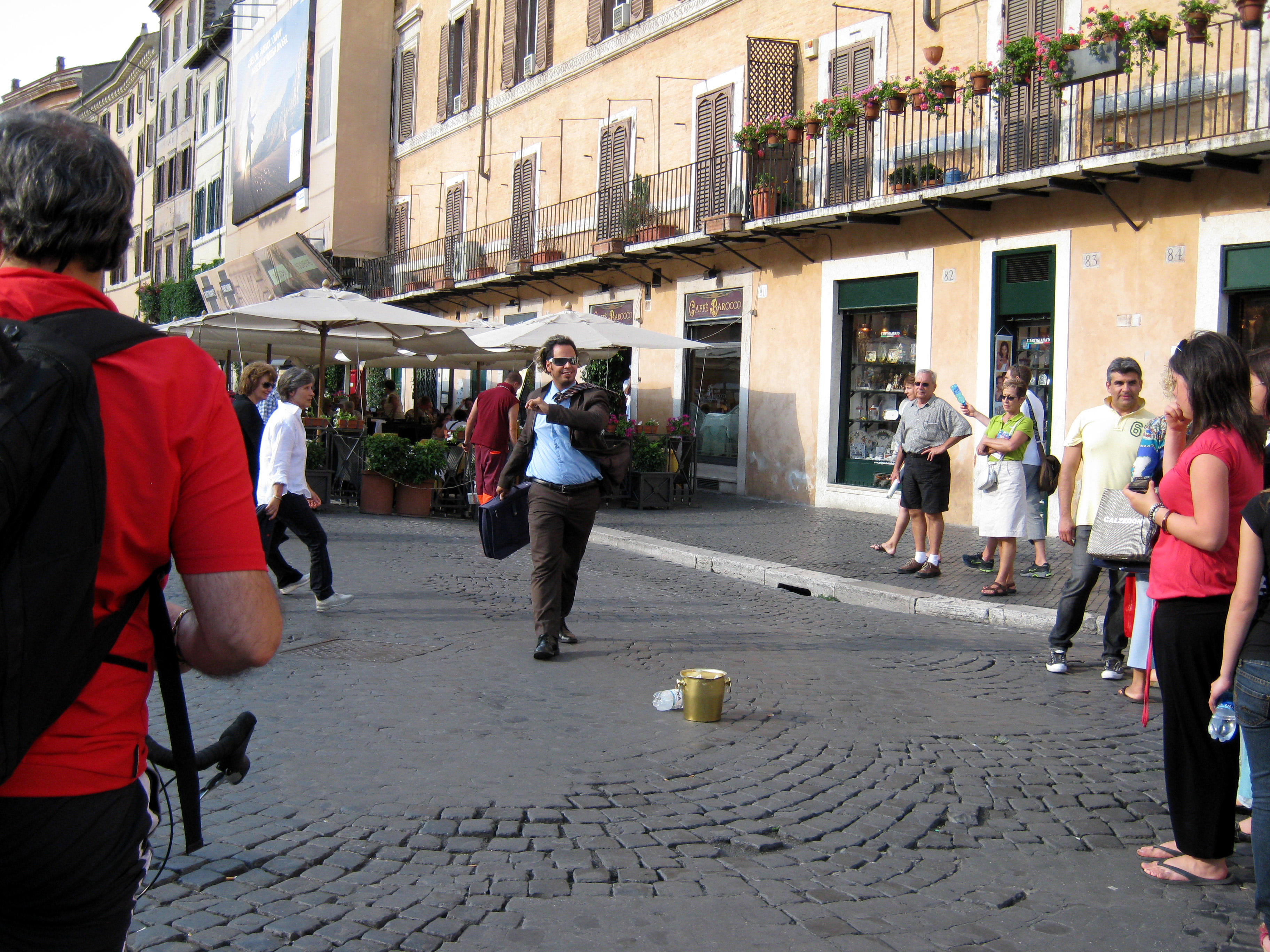
a pleasant place to spend some time on a warm afternoon or evening. Street performers have long since figured
this out, and are present in force, mostly in the southern half of the
square. We passed through the Piazza
several times during our stay, as it was so close to our apartment, and in the
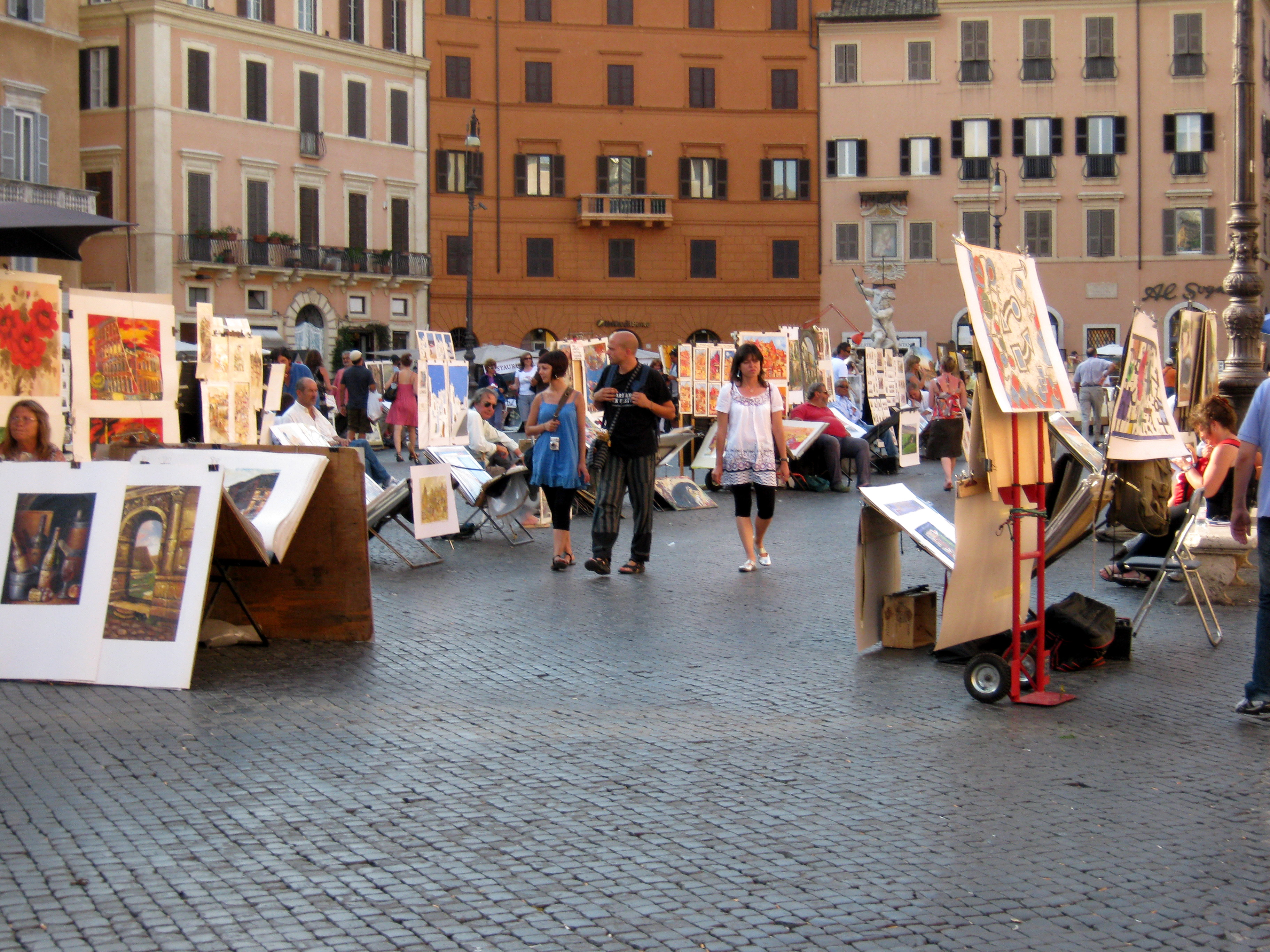
afternoons we always noticed an art show in the northern portion of the square,
with many easels displaying oil paintings for sale.
Street Performer | 
Art Show |
The
Piazza Navona occupies the space once taken up by the first-Century A.D.
Stadium of Domitian, a large venue (seating approximately 15-20,000 people)
devoted to athletic competitions, particularly footraces. The Piazza became the site of the city market
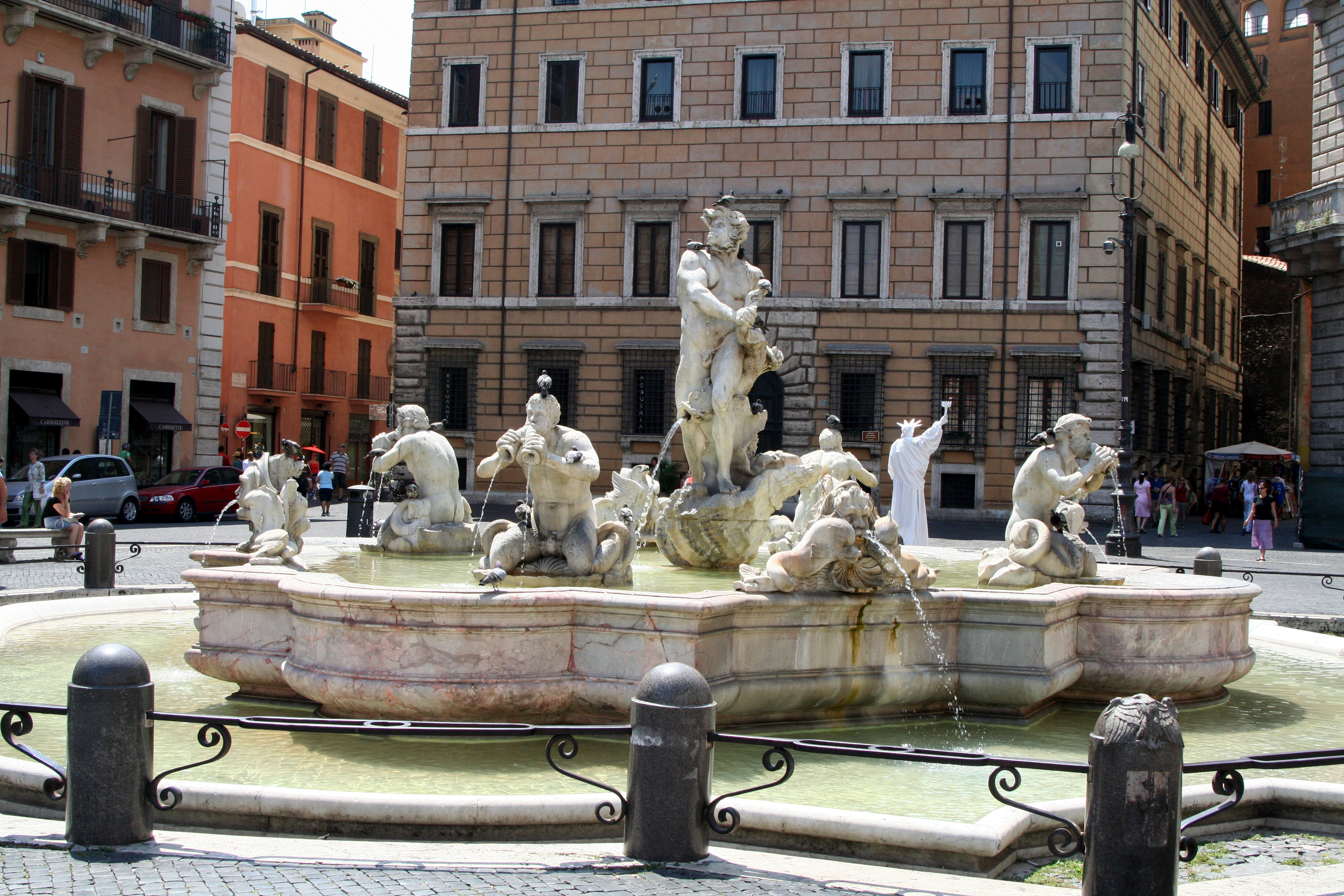
in the late 15th Century. Two
fountains were added at the north and south ends of the square in the late 16th
Century, both initially sculpted by Giacomo della Porta. Both of these fountains were embellished in
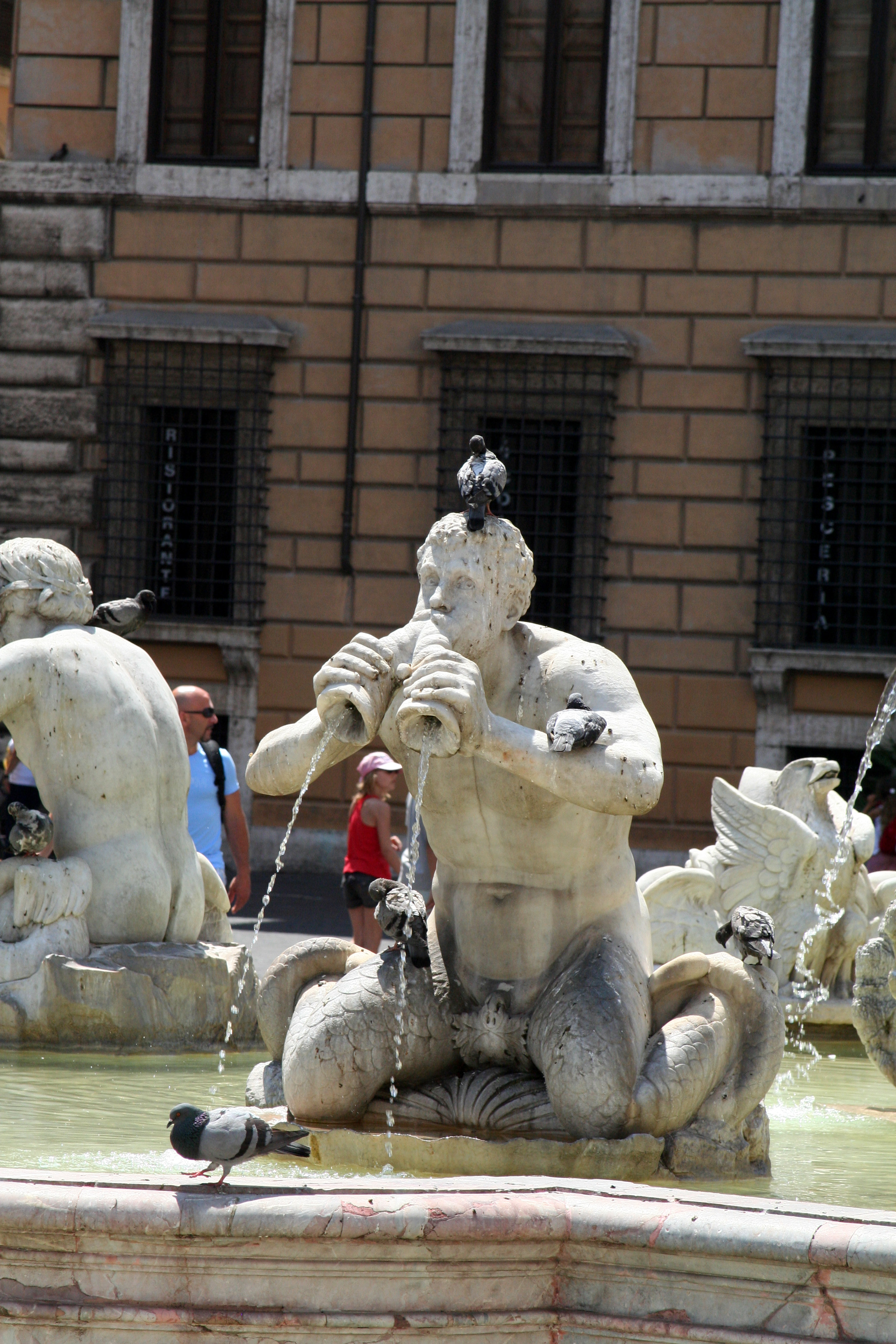
later years, with the southern fountain (called the Fontana del Moro) acquiring
a statue of a Moor wrestling a dolphin in 1673 (sculpted by Gian Lorenzo
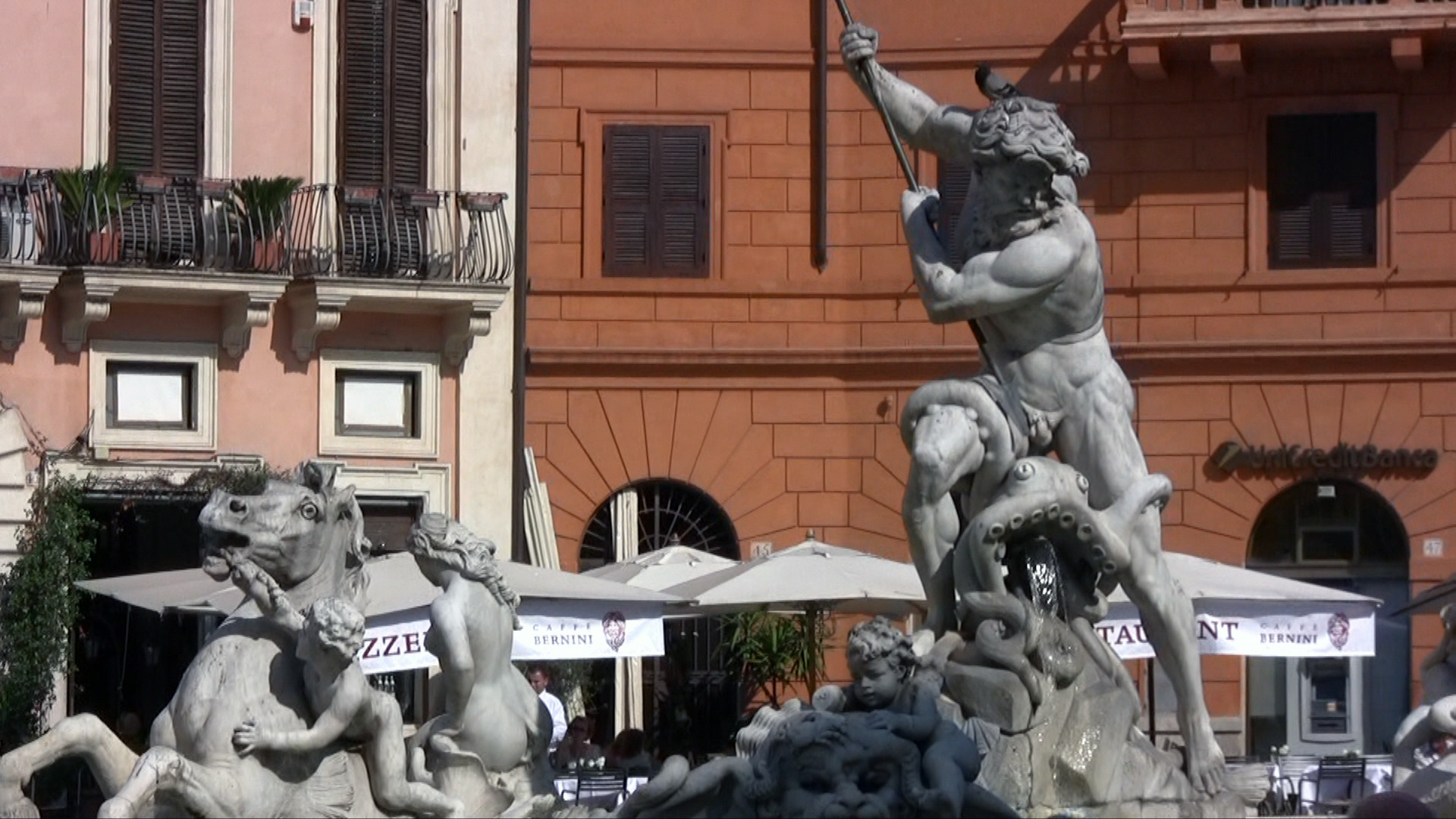
Bernini), and the northern fountain (called the Fountain of Neptune) receiving
a statue of Neptune in 1878 (the work of
Antonio della Bitta).
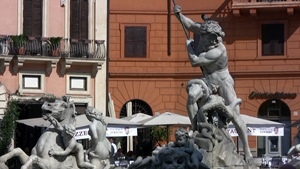
Fountain of Neptune
At
the center of the square is a fountain that would have to be considered the
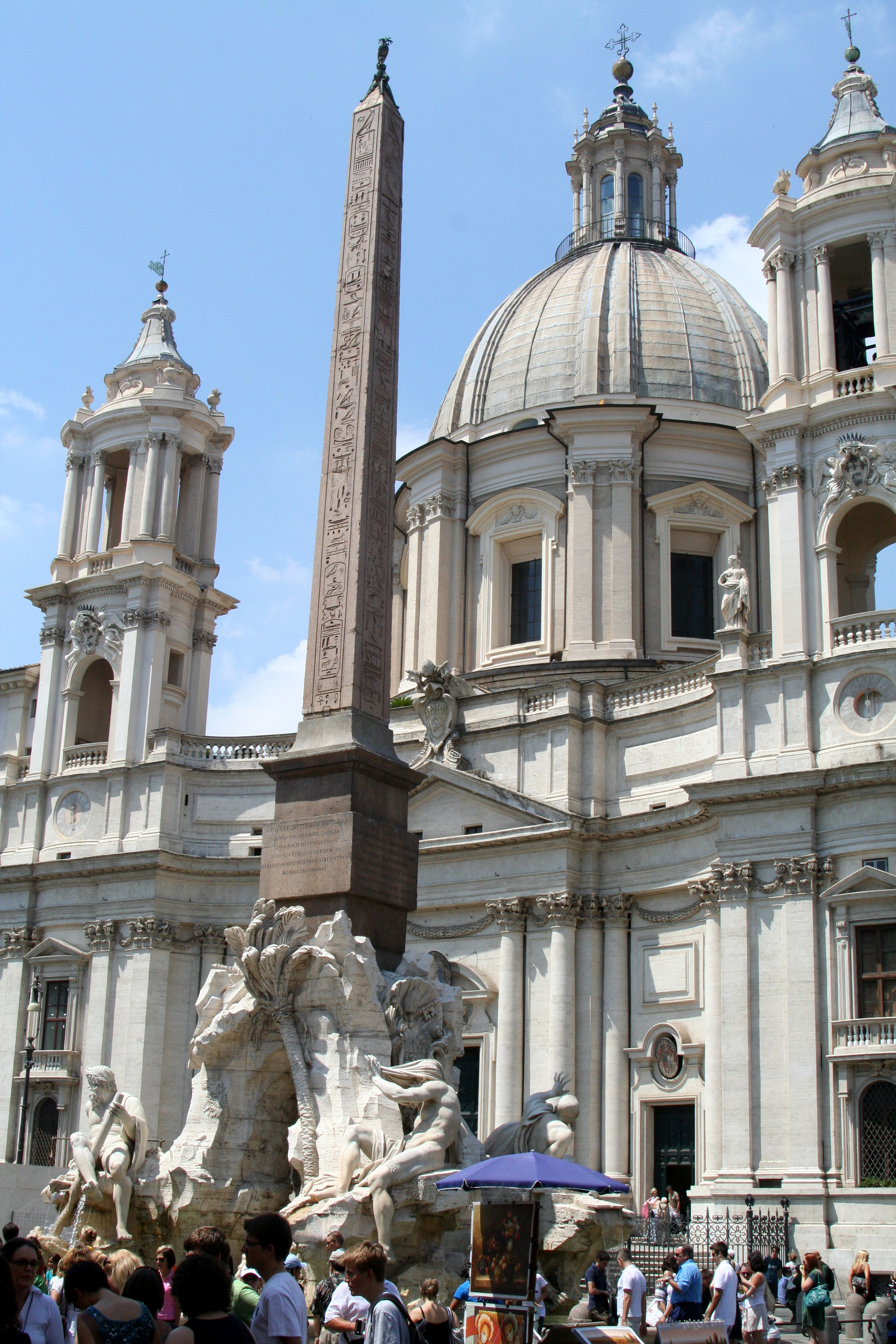
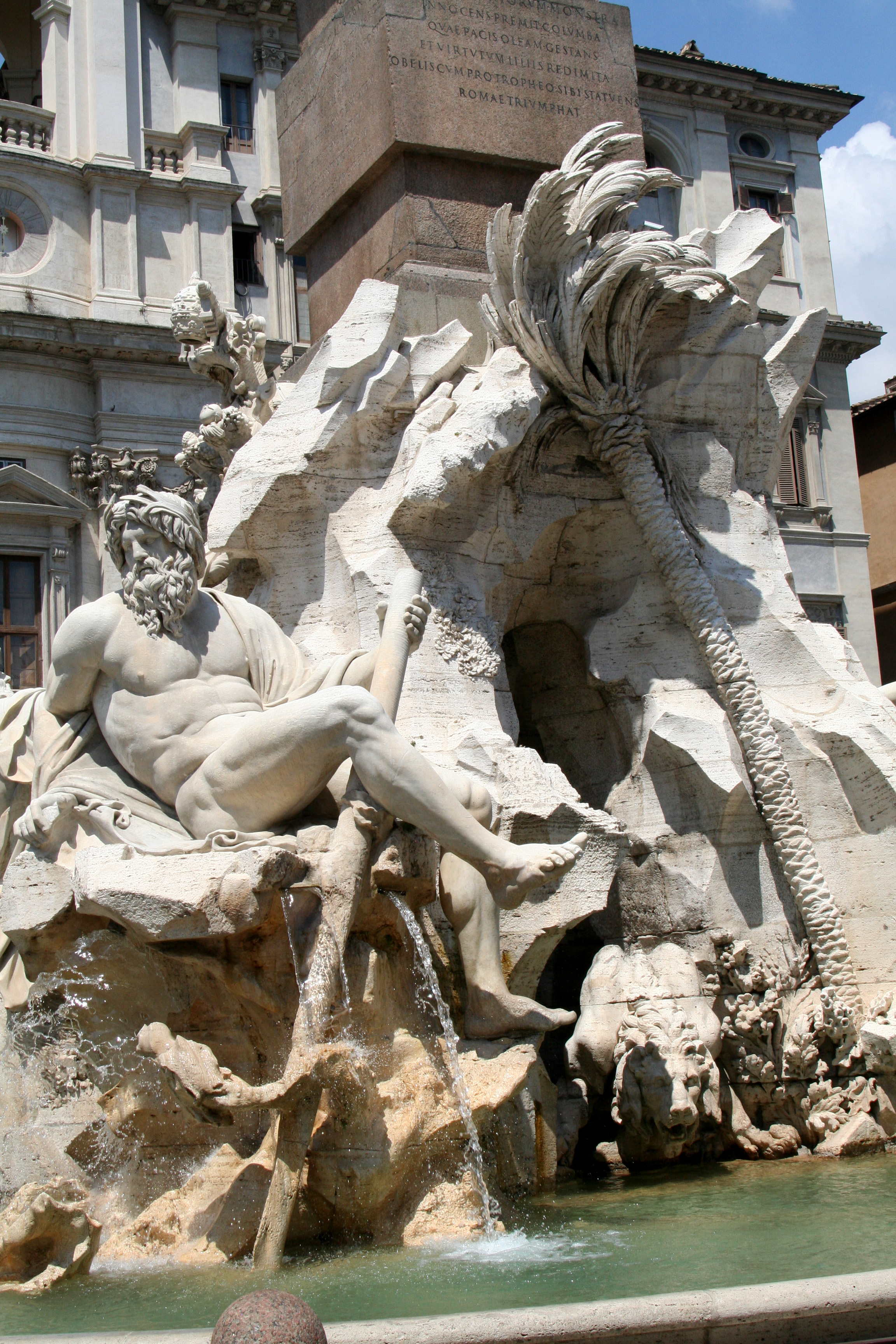
square’s best-known landmark, Bernini’s Fontana
dei Quattro Fiumi (Fountain of the Four Rivers), which was installed in
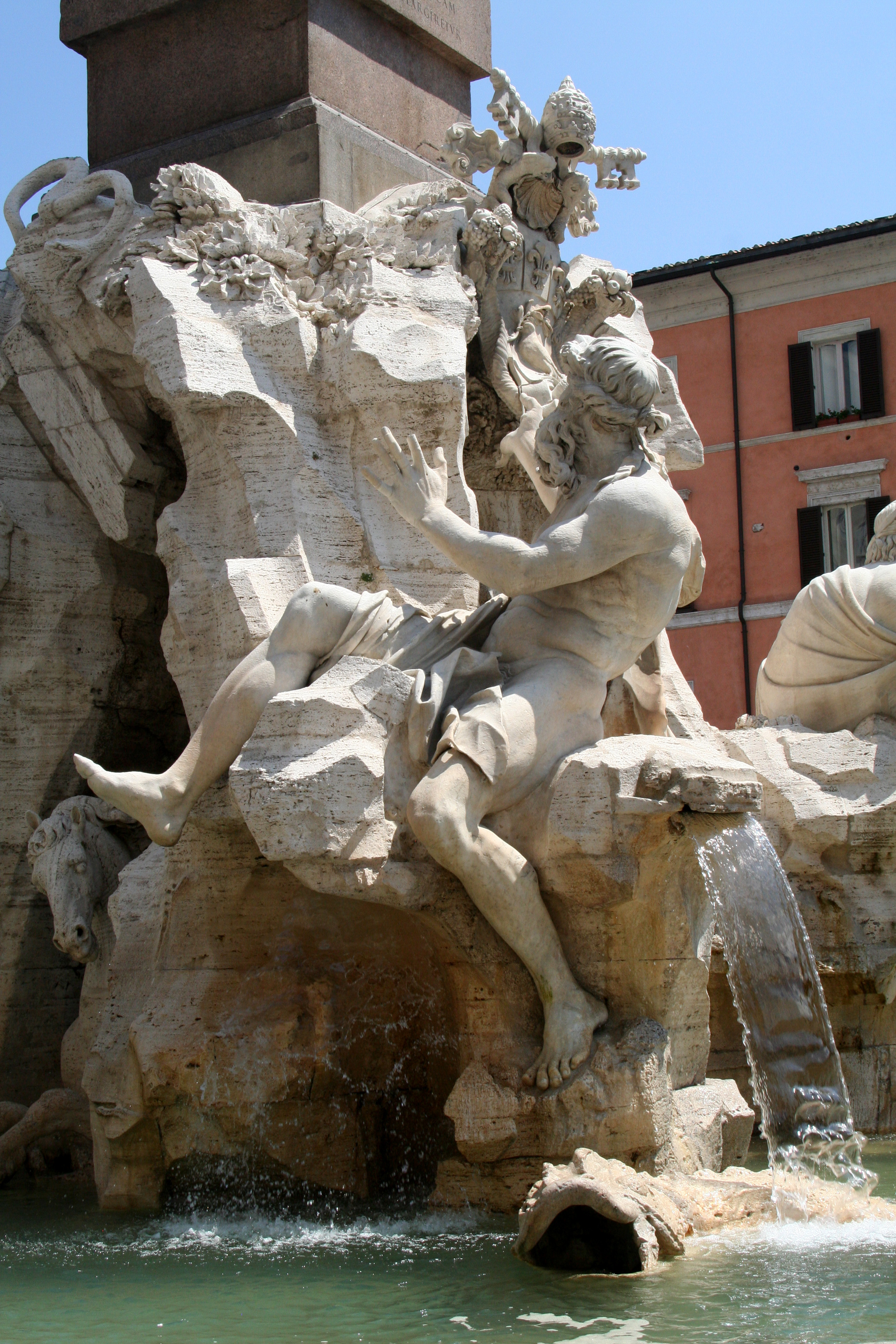
1651. At the center of the fountain is
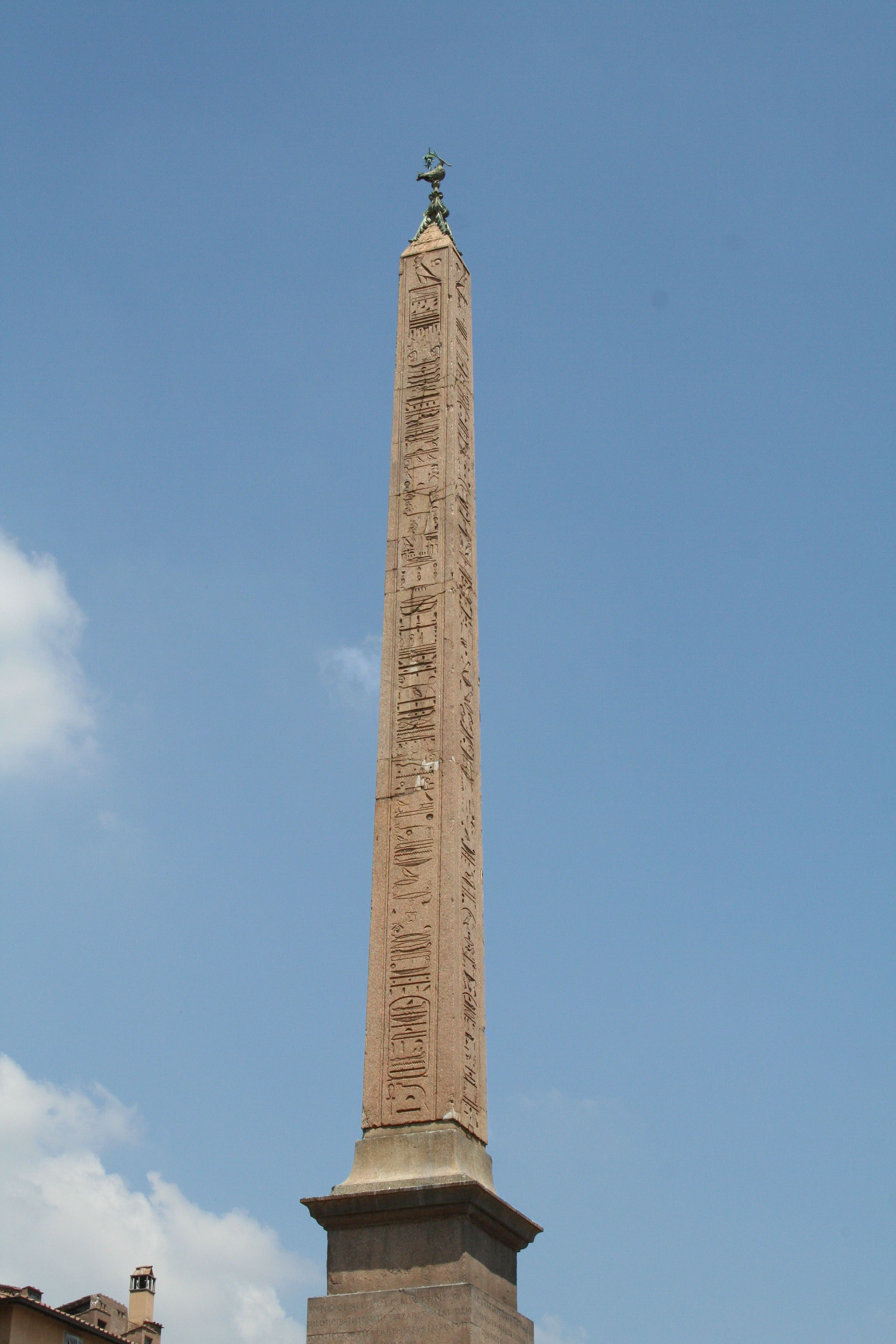
an Egyptian obelisk which was built in 81 A.D. (not by Bernini), and
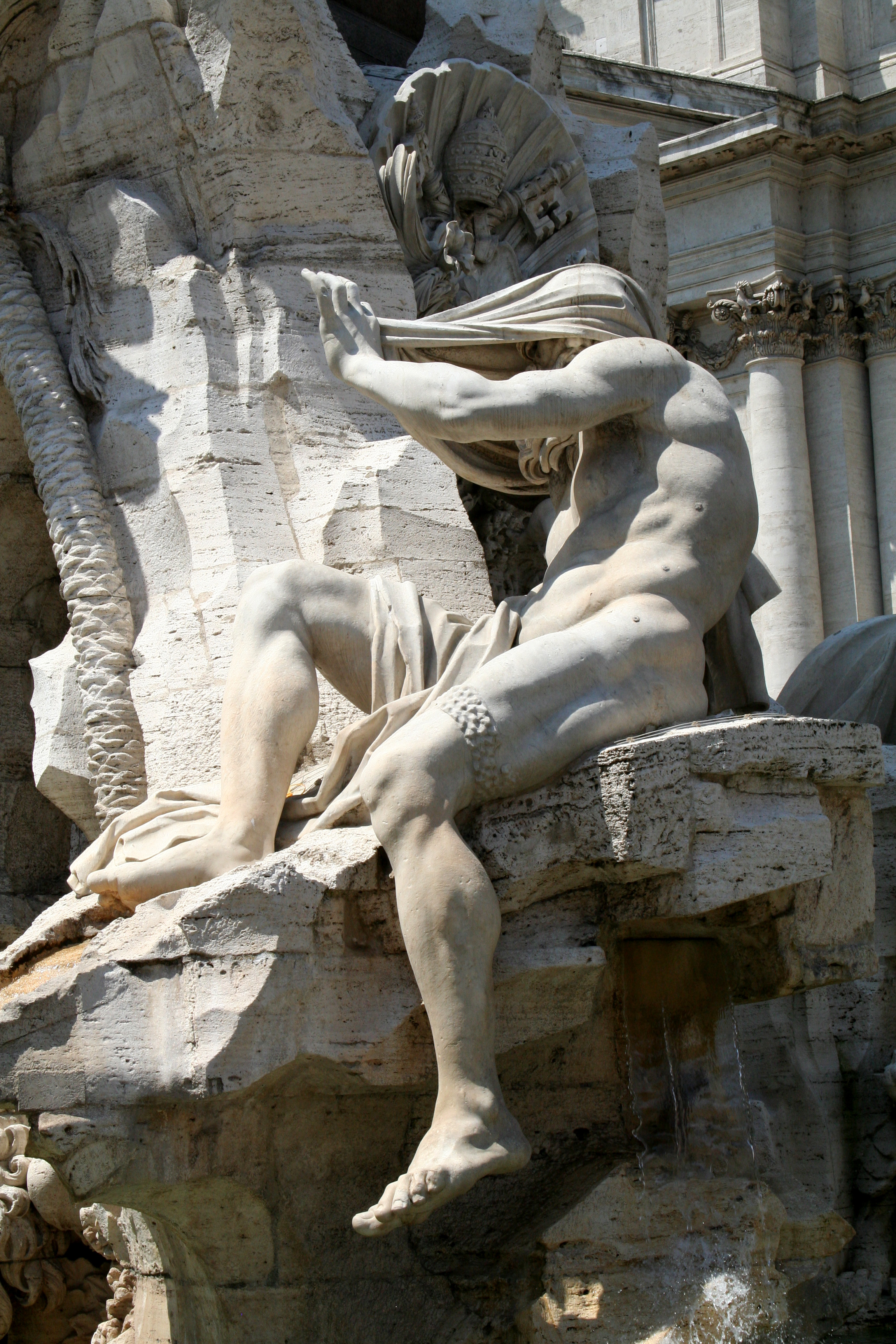
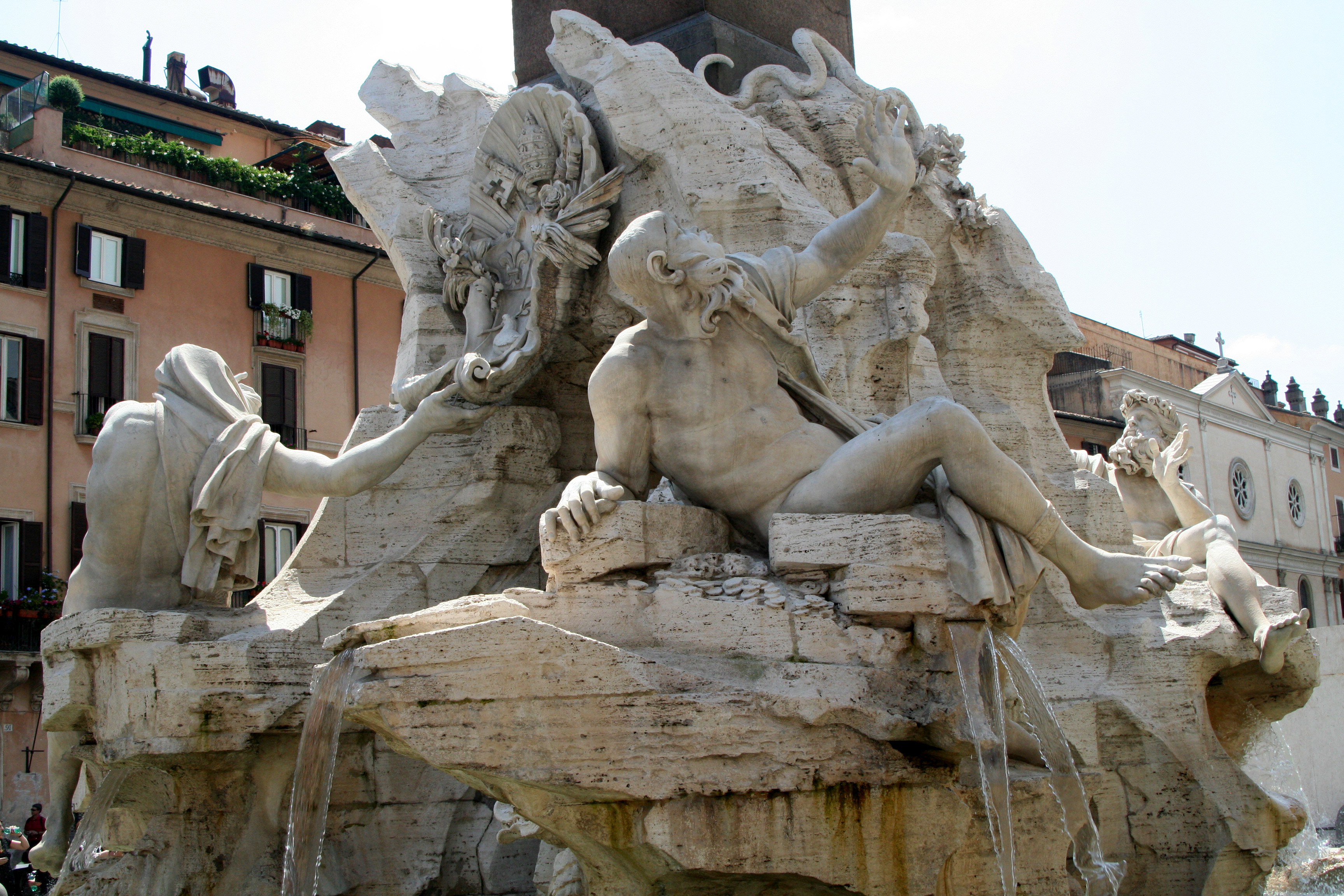
surrounding the obelisk are baroque figures representing what were considered
the world’s four greatest rivers at the time:
the Nile (Africa), the Ganges (India),
the Danube (Europe) and the Río de la Plata (South America).
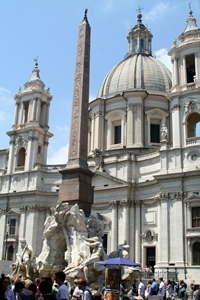
Fontana dei Quattro Fiumi and Sant’Agnese
in Agone | 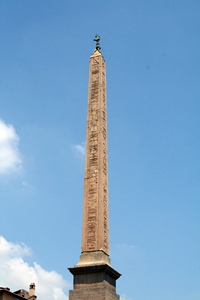
Obelisk, Fontana dei Quattro Fiumi |
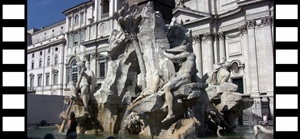
Fontana dei Quattro Fiumi
HD Video (17.8 MB) SD Video (9.7 MB) | 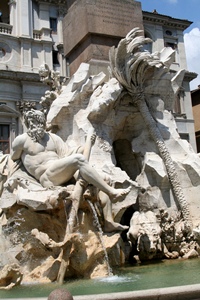
River Ganges Figure |
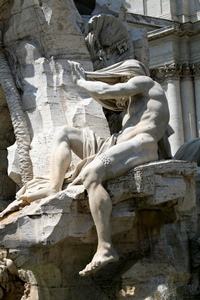
River Nile Figure | 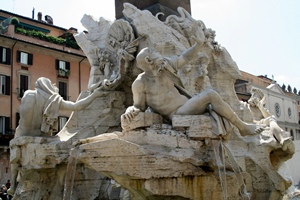
Río de la Plata Figure |
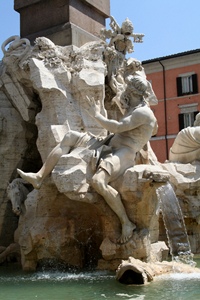
River Danube Figure | 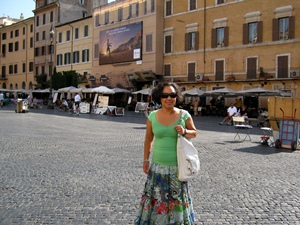
Nella on a Later Visit |
The
Church on the west side of the square is the Church of Sant’Agnese
in Agone, with a façade by Francesco Borromini (built in the period
1653-57). The church is devoted to St.
Agnes of Rome,
who is said to have been martyred (by beheading) on the site of the church in
304 A.D. Most of her bones are kept at
another church devoted to her, but her skull is kept in this church. It’s well documented that Borromini and
Bernini didn’t like each other, and there are stories that the Río de la Plata
figure on Bernini’s fountain is cowering in revulsion from the awfulness of the
church’s façade. But this is probably
untrue, as the fountain predates Borromini’s work on the church by two years.
After
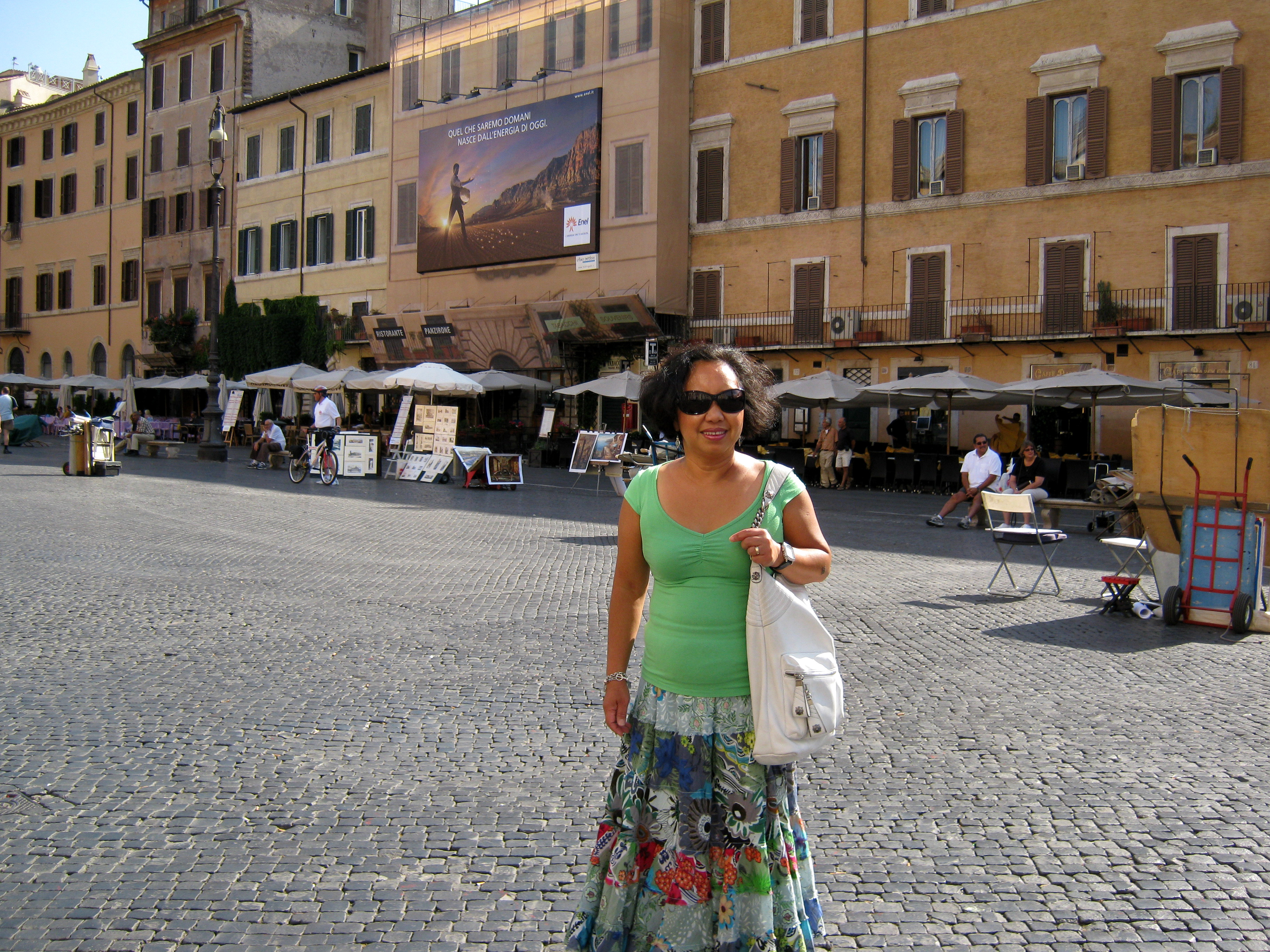
an exploration of the Piazza and a little more walking around, Connie and Bob
returned to the apartment to rest up for the next day, which was projected to
be a busy one.
Back to Rome
Continue to Villa Borghese Gardens